Did you know that for every five commercial sewing templates purchased in the U.S., one likely comes from New Look? This brand holds a substantial share of the market.
That popularity means countless stitchers have pondered the same thing about these new look patterns. They wonder if the instructions are clear and the process is straightforward.
As a founding member of the “Big 4” companies, this label has provided designs for decades. Their catalog spans simple skirts to intricate jackets.
How simple a project feels isn’t just about the patterns. Your personal skill, the manual’s clarity, and how well the pieces align all play a major role.
We’ve gathered insights from the sewing community for this review. You’ll see honest accounts of triumphs and hurdles people have faced.
We’ll examine the quality of the guides, the precision of the drafting, and common fitting issues. A comparison with popular independent designers will also be provided.
Whether you’re picking out a first project or are a seasoned pro, this guide aims to give you a realistic preview. You’ll know exactly what to expect before you cut your fabric.
Key Takeaways
- New Look is a major, long-established pattern company within the sewing world.
- The perceived simplicity of any sewing project depends heavily on the maker’s experience level.
- This review is based on real-world feedback from a community of sewers.
- Critical factors include the instruction manual’s clarity and the template’s accuracy.
- The article provides a direct comparison with modern independent pattern companies.
- Its goal is to help crafters of all skill levels set proper expectations.
Overview of New Look Patterns
The world of commercial sewing patterns has long been dominated by a quartet of established brands. Among them, New Look patterns have been a part of the sewing landscape for decades. They provide accessible, fashion-forward designs for home sewers across the United States.
Background and Design Philosophy
This company has operated for many years with a clear goal. It aims to translate current runway styles into achievable projects for home crafters. The focus remains on offering a wide range of trendy options without a high price tag.
This philosophy makes contemporary fashion accessible to those who make their own clothes. The design approach prioritizes wearable, on-trend pieces that mirror ready-to-wear collections.
Evolution of Big 4 and Indie Patterns
A significant shift began around 2013. Popular television programs sparked renewed interest in home sewing. This demand created space for independent designers to enter the market about five years ago.
These indie brands often present their pattern instructions with full-color photographs instead of line drawings. They also popularized instant PDF downloads, allowing projects to start immediately. Many indie designs carry memorable names rather than anonymous numbers.
In contrast, the traditional companies maintained a familiar, illustrated format for decades. Their packaging and instructions can appear dated next to the sleek presentation of newer brands. Independent offerings often come with a higher price point as well.
Despite this evolution, the established brands retain key advantages. Their vast libraries and frequent sales provide consistent value. Many experienced sewers appreciate their decades of technical drafting knowledge. Understanding this history helps explain where this brand fits in today’s diverse market.
Assessing Pattern Instructions and Clarity
Many home sewers find the moment of unfolding a pattern’s instruction sheet to be the most daunting. The clarity of these guides makes or breaks your project’s success.
Your ability to follow the instructions depends on their layout and the knowledge they assume you have.
Layout and Visual Guidance
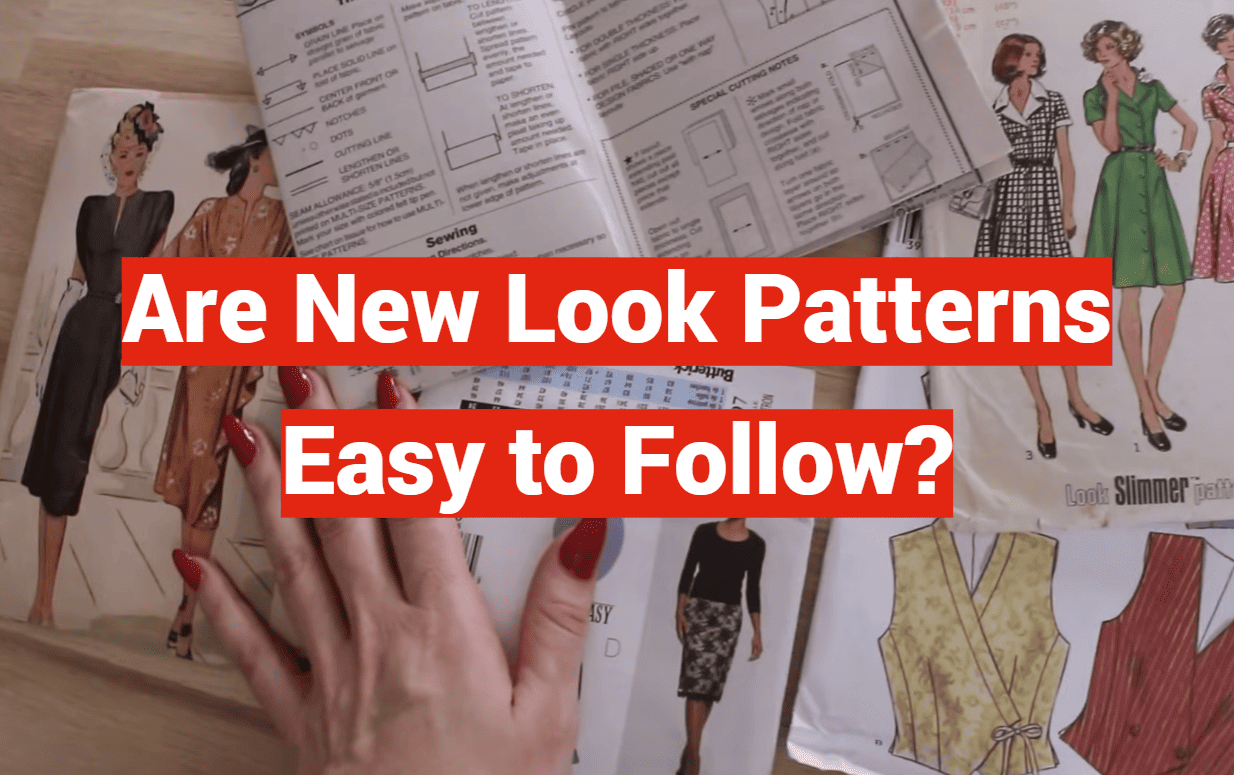
These pattern sheets use illustrated diagrams, not photos. This traditional style hasn’t changed in decades.
For sewers used to modern photo guides, it can be a bit challenging at first. The visual guidance relies on standard symbols and abbreviations.
One key point is that the instructions tell you the order of construction. They often do not explain how to execute each technique.
Common Confusing Steps and How to Overcome Them
A confusing step might ask you to trim seam allowances. Experienced sewers suggest fitting a muslin first to see if this is needed.
Carefully mark all notches and dots on your pattern pieces before cutting. These marks are critical for aligning pieces correctly.
To overcome hurdles, read all instructions completely before you start. Identify any unclear step and research the technique.
If you’re one who is new to this format, begin with a simpler design. Creating a test version in muslin is a smart move for any complex garment.
Are New Look Patterns Easy to Follow?
Feedback from home sewers reveals a spectrum of experiences with these commercial designs. Some projects go smoothly, while others hit major snags.
User Experiences and Frustrations
Community comments show strong opinions. One sewer called a specific design “one of the most frustrating patterns I’ve ever worked with.”
“The bodice side back was 1.5 inches longer than the front where they should match. I checked my sizes and pieces—it was a drafting error.”
This kind of mistake confirms the problem is with the template, not user skill. It forces improvisation during sewing.
Fit Adjustments and Pattern Matching Challenges
Getting the right fit is a common hurdle. Many report these new look patterns have a lot of wearing ease.
You might need to choose smaller sizes than usual. However, experiences contradict each other.
Some find these patterns have less ease than other major brands. The waistline often ends up too large.
Creating a test garment, or muslin, is essential for navigating these things.
| Pattern Number | User Experience | Key Issue | Fit & Ease Note |
|---|---|---|---|
| New Look 6457 | Extremely frustrating; drafting error | Pieces did not align correctly | Excessive ease; size down several sizes |
| New Look 6892 | Surprisingly quick and easy | No major issues reported | Good fit without full bust adjustment |
The table shows how inconsistent results can be. Success depends heavily on finding a well-drafted design.
Real-World Project Insights
Two recent sewing projects showcase the unpredictable nature of working with commercial patterns. The final garment often tells the real story.
These case studies highlight how results can vary dramatically, even within the same brand’s catalog.
Case Study: Creating a Halter Neckline Dress
A sewer attempted View D of a popular halter dress. The fabric was a simple linen-look polyester.
Major issues arose during construction. The bodice front and side back pieces did not align correctly.
The side back was a full 1.5 inches longer. This required folding and pressing the excess material, hoping to trim it later.
Even after fixing that, the waistline was far too large. This happened despite using the envelope’s finished measurements.
Another project, a sleeveless top with a ruffled neckline (View E), was a completely different experience.
It used only three pattern pieces and bias binding. The sewer made minor adjustments for length and neckline height.
The finished dress was an instant hit. The recipient loved it so much she changed into it at a party and requested a second one.
| Pattern & View | Key Challenge | Outcome |
|---|---|---|
| 6457 (Halter Dress) | Misaligned pieces; poor fit | Frustrating; required significant fixes |
| 6892 (Ruffle Neckline Top) | Minor modesty adjustment | Quick, successful, and loved |
These stories prove the importance of evaluating each design individually. Making a test garment first is the best way to avoid surprise issues on your final dress.
Comparing New Look with Indie Patterns
Indie designs have reshaped expectations with their stylish presentation and community focus. The most obvious difference is packaging.
Independent brands use memorable names and full-color photographs. These styles often cater to visual learners.
They also offer instant PDF downloads. This allows sewers to start projects the same day.
Design Trends and Pattern Innovation
Trends in indie design lean toward simple, modern shapes. Some focus on vintage-inspired tea dresses and floaty skirts.
European brands push boundaries with original ideas. In contrast, New Look offers a broad range of clothes.
Their catalog includes basics and fashion-forward styles. However, their presentation can seem dated.
Price is a major factor. Indie patterns often cost $15 to $25. New Look templates frequently sell for $2 to $6 on sale.
| Aspect | New Look Patterns | Indie Patterns |
|---|---|---|
| Price Point | $2 – $6 (on sale) | $15 – $25+ |
| Presentation | Illustrated guides, numbered | Photographic instructions, named |
| Design Innovation | Broad range, classic | Often trend-focused, original |
| Community Support | Limited | Extensive (sew-alongs, hashtags) |
One sewer wisely noted,
“don’t dismiss the big companies out of hand because they do still have something to offer, relative cheapness for basics being one of them.”
Your choice depends on priorities. For affordable variety, New Look excels. For modern aesthetics and support, indie designs may justify the cost.
Optimizing Your Sewing Process
Smart preparation transforms a potentially frustrating project into a smooth creation. Your fabric choice and timeline management are critical factors for success.
Fabric and Material Considerations
Your selected material dramatically impacts the final garment. Lightweight wovens like cotton gauze or linen are perfect for summer tops and dresses.
These fabrics breathe and drape well. They also handle presser feet with ease.
For a recent successful top, a sewer used floral cotton gauze. The pattern required bias tape and elastic.
You can buy pre-made tape or craft your own from leftover fabric. This adds a custom, cohesive look.
| Fabric Type | Best For | Sewing Ease | Key Note |
|---|---|---|---|
| Cotton Gauze | Summer dresses, flowy tops | High – forgiving and presses well | Used in the quick 2-hour project |
| Linen | Structured garments, warm-weather styles | Medium – can wrinkle but handles nicely | Provides excellent breathability |
| Linen-Look Polyester | Halter necklines, durable projects | Variable – check drape first | Used in the project requiring fit adjustments |
Time Management and Ease of Assembly
Your sewing time can vary wildly. One project with three pieces took just two hours.
Another design needed major fit adjustments. Always make a test version in muslin first.
This step finds issues without wasting good material. Mark all notches on your piece before cutting.
Complete any length or neckline changes on the pattern tissue. This saves time during construction.
After years of practice, many find this upfront investment pays off. Today, you can mix affordable New Look patterns with online tutorials.
Don’t hesitate to ask for help in communities. A little extra bit of planning creates garments you’ll love wearing.
Conclusion
The sewing community’s verdict on this established brand is nuanced, reflecting both value and variability. Are New Look patterns simple? Your experience level and the specific design chosen determine the answer.
Confident stitchers often navigate these patterns successfully. They use standard sewing knowledge. Beginners may find the illustrated format a challenge compared to modern alternatives.
The real test isn’t the instructions. It’s the pattern drafting and size consistency. Making a muslin version first is a non-negotiable step for a good fit.
When you find a well-drafted project, you create beautiful garments like dresses, skirts, and a top for summer. The company offers vast variety at low cost. This allows experimentation without risk.
Over the years, many have achieved stunning results. Success requires realistic expectations and a willingness to make adjustments. Invest time in fitting, and one can build a custom wardrobe efficiently.